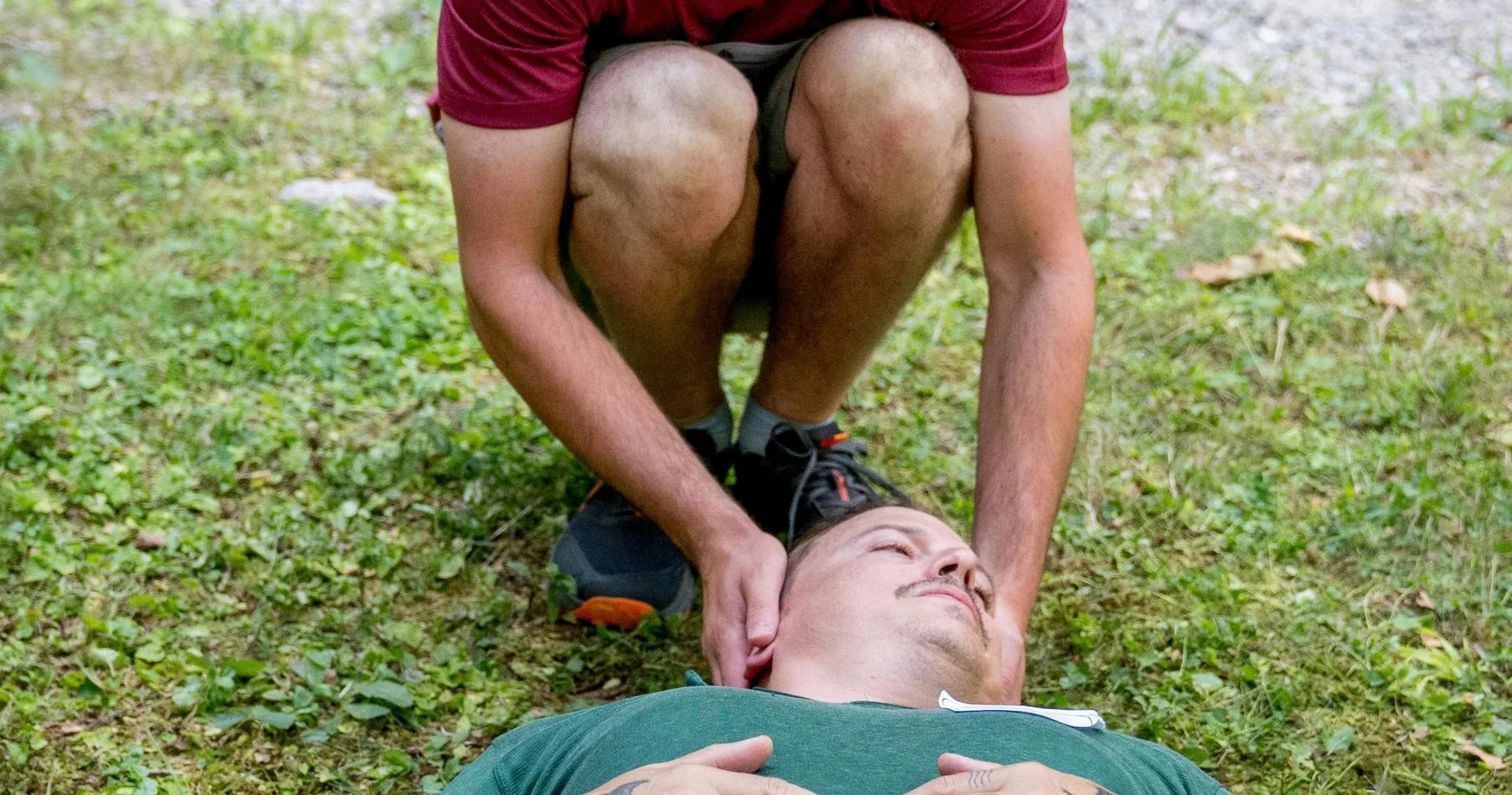
Saving a student in the cafeteria!
Story
Léa, a 16-year-old teenager, is in her final year of high school. One morning, during the lunch break, she and her friends gather in the cafeteria to share a meal. The cafeteria is full of life, with students chatting and laughing while they eat. Suddenly, a panicked scream pierces the air: "Hugo is choking!"
Hugo, one of Léa's classmates, is suffocating, his eyes wide open, unable to breathe. He has apparently choked on a piece of sandwich. In panic, he rises from his chair and desperately tries to catch his breath. The students around him are agitated, not knowing what to do. Léa, who took a first aid course the previous year, immediately realizes the severity of the situation and decides to intervene.
Without wasting any time, Léa stands up and asks the other students to step aside so she can act. She approaches Hugo from behind and calmly tells him she is going to help him. Léa positions herself correctly and performs the Heimlich maneuver: she places her arms around Hugo's waist, clenches her fists and delivers a series of quick, upward thrusts just below the rib cage.
After a few seconds that feel endless, the piece of sandwich is expelled from Hugo's throat. He immediately catches his breath, coughs and begins to breathe normally. Relieved and grateful, he whispers a "thank you" to Léa, tears in his eyes.
The teachers and cafeteria staff arrive quickly after the incident. They commend Léa for her composure and effectiveness. Hugo is taken to the infirmary for a more thorough examination, but he is out of danger thanks to Léa's swift intervention.
The dramatic incident that nearly cost Hugo his life shows us the crucial importance of a swift and appropriate response in the event of choking. Léa's immediate reaction and first aid skills were decisive in saving her classmate's life. This episode highlights the importance of knowing and following a specific protocol in an emergency, which we will now examine in detail.
In this section, we will review the key steps of an effective intervention protocol for choking. By understanding these steps and putting them into practice, we can be better prepared to respond quickly and correctly in a similar emergency. Let us learn together the essential actions to take to provide optimal assistance in such situations.
1) ASSESS THE SITUATION
INTERVENTION PROTOCOL
By understanding the key steps of the protocol and putting them into practice, we can be better prepared to respond quickly and correctly in a similar emergency. Let us learn together the essential actions to take to provide optimal assistance in such situations.
Check whether the victim can speak, cough or breathe.
If the victim cannot breathe or speak, this is an emergency.
Place your arms around the victim's waist.
Make a fist with one hand and place the thumb against the abdomen, just above the navel.
Grasp the fist with the other hand and deliver a series of quick, upward thrusts.
Continue the thrusts until the object is expelled or the victim loses consciousness.
If the victim loses consciousness, immediately begin cardiopulmonary resuscitation (CPR).
Ask someone to call emergency services as soon as possible.
Continue the thrusts and CPR until help arrives.
After the object is expelled, monitor the victim for any signs of respiratory distress.
Encourage the victim to consult a doctor to make sure there are no additional complications.
Associated first aid training
Includes the full protocol and other essential first aid maneuvers geared toward the general public.
Please click the button below to obtain the complete details of the training.
Importance of training
This fictional scenario shows us that real first aid knowledge is essential during events where human life is at stake. A swift and appropriate intervention can also significantly support healing and recovery from a serious injury. Mastering the knowledge from a complete first aid course can be useful in many critical situations, and even in everyday accidental care.
Conclusion
Léa's story and the swift intervention she carried out to save Hugo highlight the vital importance of first aid knowledge. In the face of an emergency, every action counts, and an appropriate response can make all the difference in the victim's survival and well-being. By understanding and following a specific protocol, we can be better prepared to respond effectively in an emergency, such as choking.
This knowledge can not only save lives but also reduce the risk of serious complications. Let us all be aware of the importance of first aid actions and ready to act when the situation demands it, because each of us can be a hero in an emergency.
Let us learn, practice and share these skills to create a safer environment for everyone.
Written by Alexandre Grenier, Founder of Formation RCR et Secourisme Québec
Laid out and reviewed by Roxanne Duchesneau, Graphic Designer